Google says "SEO for AI is the same as SEO for Search"
By Seth Black · Published · Updated
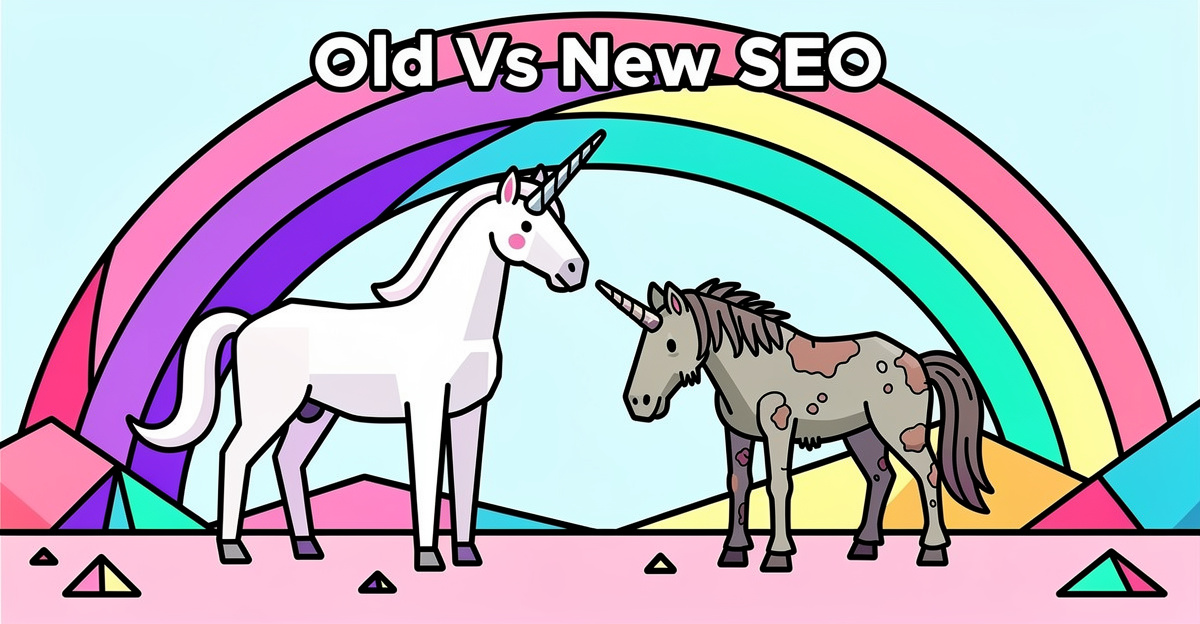
I’ve been watching the SEO community lose its mind over AI search. Every few weeks there’s a new acronym - GEO, AEO, AIO - along with a bazillion tools promising to rank you in ChatGPT and guarantee brand mentions, and every week someone’s trying to sell you a course on it. Meanwhile, Google’s over here saying, “Relax. It’s still SEO.”
Danny Sullivan and John Mueller have been repeating some version of this for a while: optimizing for “AI Search” doesn’t change the fundamentals. It’s still search. It’s still SEO. And most of the acronym soup is a new label slapped on the same old box.
If you want the source material straight from Google’s mouth:
The real question isn’t “is AI search real?” Of course it’s real. The question is: is AEO/GEO mostly a marketing rebrand, or are there actually new tactics that beat classic SEO?
The boring truth about AI search
If you ignore the buzzwords, Google’s claim is pretty reasonable.
AI systems still need what search engines have always needed: content, quality signals, structure, and a reason to show your stuff to someone. That’s SEO. That’s always been SEO.
Yes, the UI changed. We went from “10 blue links” to “a chatty answer box that acts like it pays rent.” But the machine still has to decide what’s true-ish, what’s relevant, and what it’s willing to repeat out loud.
Here’s the other uncomfortable part: we still don’t fully know how different LLMs decide to mention a brand. Some lean on retrieval. Some lean on training data. Some do both. Some do something else and call it “helpful.” Anyone selling certainty here is selling you vibes.
So foundational SEO still matters. The usual stuff:
Technical health (crawlable, indexable, fast, not held together by 47 plugins). Clear topical relevance (pages that match real intent, not “keywords we wish people typed”). Authority and trust (links, mentions, reputation, and actual expertise where it matters). Good UX (readable, scannable, not a pop-up haunted house). And maintenance (update old pages, fix broken claims, prune junk).
If you do that well, you’re not “behind” just because someone renamed the thing.
Your broken site is still broken
If your site has broken links, slow pages, missing metadata, and sloppy schema, no amount of “GEO” is going to save you. You’re just hoping a robot will ignore your broken site.
LLMs don’t make the web less technical. They change how people arrive at your content. Once they land, the same boring physics apply. Fast pages keep people from bouncing. Clear structure helps humans skim and helps machines parse. Schema reduces ambiguity. Content that answers real questions earns citations over time.
Quick personal scar tissue here: I’ve been brought into more than one company where leadership wanted “AI SEO” and what they actually had was a site Google couldn’t crawl, 300 near-duplicate pages, and a blog that read like it was written by a committee of interns supervised by a spreadsheet. Another company was convinced “SEO was dead,” so they ignored the basics for months while chasing growth hacks. Churn spiked, support got blamed (classic), and the real issue was that prospects couldn’t load key pages on mobile without waiting long enough to grow a beard. We fixed performance and structure, conversions improved, and nobody called it “AIO.” They just stopped breaking the website.
No acronym fixes that. You fix the basics, and everything else gets less mysterious.
Why everyone’s inventing new acronyms
People invent new terms for the same reason startups invent new job titles: it makes them money. New channel appears, old advice gets rebranded, everyone sells shovels.
When someone says, “We do GEO now,” or “We specialize in AEO,” a lot of the time what they really mean is: we do SEO, but we need you to feel urgency and sign a new contract.
That doesn’t mean nothing changed. It means the changes are evolutionary, not magical. It’s not a new discipline. It’s new tactics and new measurement headaches.
What actually changed (the parts worth caring about)
Answer-shaped content matters more than it used to
AI summaries and chat interfaces prefer content that’s explicit, well-structured, easy to quote, and not buried under 900 words of throat-clearing.
That means:
- Put the direct answer near the top.
- Use clear headers that say what the section is.
- Define terms like you want to be cited.
- Write FAQs that sound like a human wrote them, not like you’re trying to win a legal case.
You’re basically writing so a machine can safely extract your sentence without accidentally committing defamation. Predictable structure helps here, and it also makes the page less annoying to read:
<h1>How to Choose a Payroll Provider</h1>
<h2>What payroll actually includes</h2>
<h2>Key features for small teams</h2>
<h2>Pricing traps to avoid</h2>
<h2>FAQ</h2>
That’s not GEO. That’s just not making your readers suffer.
Entity clarity is suddenly very obvious
Search engines have been moving toward entities for years. AI just makes it more visible.
You want your site to be painfully clear about:
- who you are
- what you do
- what you’re known for
- how you relate to other known concepts
This is where schema and consistent “about” information help. Not because schema is a spell. Ambiguity is expensive for machines, and they hate paying for things.
Here’s a tiny FAQ schema example. Again: not magic. Just a label.
<script type="application/ld+json">
{
  "@context": "https://schema.org",
  "@type": "FAQPage",
  "mainEntity": [{
    "@type": "Question",
    "name": "Is AEO different from SEO?",
    "acceptedAnswer": {
      "@type": "Answer",
      "text": "Mostly it's SEO fundamentals packaged for AI answer interfaces, with extra focus on clarity and quotable formatting."
    }
  }]
}
</script>
Does this make you rank #1 tomorrow? No. Does it help machines understand your content? Yeah, a little.
Brand and reputation signals matter more because the system is “speaking”
In an AI answer, the system is effectively talking. That makes it risk-averse. So it leans on well-known brands, widely cited sources, and consistent reputations across the web.
Classic SEO people call this off-page signals. Same concept. The interface just makes it feel harsher. If the AI is going to “say” something, it wants cover.
Measurement is messier (and yes, it’s annoying)
In traditional search, you could track impressions, clicks, and rankings. In AI summary land, you may get fewer clicks, more “influence” with no attribution, and weird shifts in query behavior.
This is where a lot of the “new discipline” talk comes from. Some reporting changes are useful. Some of it is astrology with spreadsheets. If your dashboard has 19 charts and none of them explain revenue, you’re allowed to be suspicious.
So is AEO/GEO mostly a rebrand?
Yeah, mostly. But there’s a catch.
AEO/GEO is basically SEO with extra emphasis on:
- formatting for extraction (be quotable)
- entity clarity (be unambiguous)
- trust and reputation (be safe to cite)
- answering instead of teasing (stop writing like you’re paid by the scroll)
That’s not a revolution. That’s SEO growing up. Again. For the 14th time.
Here’s what I’d actually do this quarter
Not a “framework.” Just work.
1) Fix the technical basics first. Broken links, slow templates, missing metadata, schema that doesn’t match the page. Do this before you buy any tool promising “AI visibility.”
2) Make your best pages easy to quote. Add a direct answer near the top. Tighten intros. Use short sections with descriptive headers. If your page takes 45 seconds to get to the point, the AI will happily get to the point without you.
3) Use structured data where it’s real. FAQ and HowTo schema only if you actually have FAQs and how-tos. Add Organization, Product, and Article where they match the page, and make sure the markup agrees with what’s visible.
4) Strengthen “who we are” signals. Real author bios. An about page that doesn’t read like a mission statement generator. Editorial policies if you publish advice. Consistent brand names and positioning, because an LLM can’t quote what you can’t say clearly.
5) Update and prune. Fix stale pages. Remove junk that doesn’t help users. If you have ten posts that all say the same thing, you don’t have “topical authority.” You have duplication.
6) Invest in being talked about. Publish original data people want to cite. Partnerships, podcasts, community, PR, real relationships - all the slow stuff that builds a brand. AI systems learn from the web. The web learns from people. This is the part nobody wants to do because it doesn’t fit in a sprint.
AI search will create new exploits and new opportunities. But if your strategy is just renaming SEO, you’re not innovating - you’re updating your pitch deck. The fundamentals still win because the fundamentals are just making something good, making it clear, and making it trusted.
Want to check the technical basics before worrying about acronyms? Run a free 14-day BSA audit, every feature, no page limit, no credit card.
-Sethers